Tuesday, July 30, 2013

Fancywork Headdress


I've spent a fair bit of time studying mid-19th century beadwork and I was thrilled to recently acquire this very interesting example.

Fashion trends come and go and this headdress is  great example of the transition occurring during the 1860's - from beads being used primarily in "crafts" and jewelry to beads being increasingly used directly on garments.


The headdress is crocheted of red wool, with distinctly different looks to the front and back. The front is loopy, resembling shag carpeting with the addition of large white satin glass cylinder beads. The beads would have been strung on the wool prior to beginning the crochet work.


The back is far smoother, to rest against the hair. There is a decorative bow at the back and ribbon ties.


I'm always trying to find surviving artifacts that can be definitively matched to published patterns from the period - if you've encountered period instructions or images of a similar headdress, please share!!!

Sunday, July 28, 2013

HOW Old???


Mackinac is known for our lilacs and with good reason - our cold winters and limestone based soil are ideal growing conditions for lilacs.

Our lilacs tend to grow tall - compare the people to the size of the "bushes" in this photo (and these are not amongst the largest) :


But how old are they and how long have they been growing here...really?

If you listen to the Carriage Tours drivers, they tell the tourists that the French first brought lilacs to Mackinac. But it just seems really unlikely that either French fur trappers or Jesuit missionaries were hauling lilacs via canoe to plant on Mackinac, they were rather involved in other pursuits.

This particular myth makes us think of an alternative version of Johnny Appleseed - Jacque LeLac, anyone?

But at a recent presentation at the Mackinac Island Public Library, by Corinne Smith, author of
Westward I Go Free: Tracing Thoreau's Last Journey has brought to light the earliest written documentation of lilacs on Mackinac yet - in July of 1861 by Henry David Thoreau!


Suffering from "consumption," or tuberculosis, during the last years of his life, Thoreau decided, on the recommendation of his physicians, to take a trip to St. Anthony, Minnesota, to stay with a friend. He died nine months after his trip, so his notebook of the journey was never published.

He was on Mackinac from June 30 to the July 4, 1861. During his stay on the Island, Thoreau took extensive botanical notes and copied down local folk stories he learned from the county clerk, William Johnston, brother in-law of Henry Schoolcraft.

Thoreau may be best known as a writer, but he was also a botanist who collected hundreds of specimens of New England plants to create his own herbarium. In addition, he kept detailed journals, noting when and where particular species were in bloom - in fact, his journals are now being used by climatologists to to discern patterns of plant abundance and decline in Concord — and by extension, New England — and to link those patterns to changing climate.

One of these notes made during his stay on Mackinac stated: "apples in bloom - & lilac"


Will a reference in a currently unpublished diary or letter push that date back further?

Maybe...

But it doesn't change that fact that lilac time on Mackinac is magical - come visit next June and see for yourself!
Saturday, July 13, 2013

Natural Dyes - A Workshop


The earliest written description of the use of dyestuffs dates to 2600 BC and until the mid-19th century when William Henry Perkin invented the first synthetic dye, all dyes were derived from plants or animals.

I recently attended a workshop presented by Shanna Robinson, a professor at North Central Michigan College,  on natural dyeing. We left the two hour class with a silk scarf, naturally dyed.

Most natural dyes need a mordant to fix the color to the fiber and increase lightfastness. Mordant literally means "to bite". The mordant is the chemical link that fixes the dye to a substrate by combining with the dye pigment to form an insoluble compound. Our scarf was saturated with three different mordants - ferrous acetate, titanium oxalate and a chalk solution. Each mordant produces a variant of the single dye color and even more variants were the mordants overlap.


Due to time constraints (each mordant must dry completely before applying the next), Shanna had applied two of the mordants and we added the last.


We prepared the dyes while the final mordant dried. Two dye bathes were prepped, one using coreopsis which will give yellows, oranges and browns, depending on mordants and the pH of the dye bath.


And a second with weld, which gives yellows.
 

The plant materials were weighed, added to water and allowed to simmer.


The plant materials were strained out.


And the scarves went in!


A good rinse at home, to remove excess dye:


Here's my coreopsis dyed scarf - it's pretty obvious that mordants have a huge influence on the final color!


The workshop was intended to be a brief overview of natural dyeing, not an intensive, "now you're an expert" experience and that goal was well fulfilled. I learned enough to be intrigued about the potential for using the techniques in my own fiber work - it's always great to add new possibilities!


Wednesday, July 3, 2013

"Mighty Mac" Departure


The "Mighty Mac" is, of course, the Mackinac Bridge, which connects Michigan's upper and lower peninsulas. It's a fantastic structure - last year, we were able to go on a "Tower Tower"!

All the ferry lines offer a more accessible option, ferry departures to Mackinac Island that include a brief detour under the bridge. We inadvertently  were on one of these "departures" recently - enjoy the trip!


And heading for home!


Sunday, June 23, 2013

Silver Birches: A Positive Sign


Most places have one, the intriguing building, closed up for decades that tempts you to trespass and peek in the windows at what may be waiting inside.


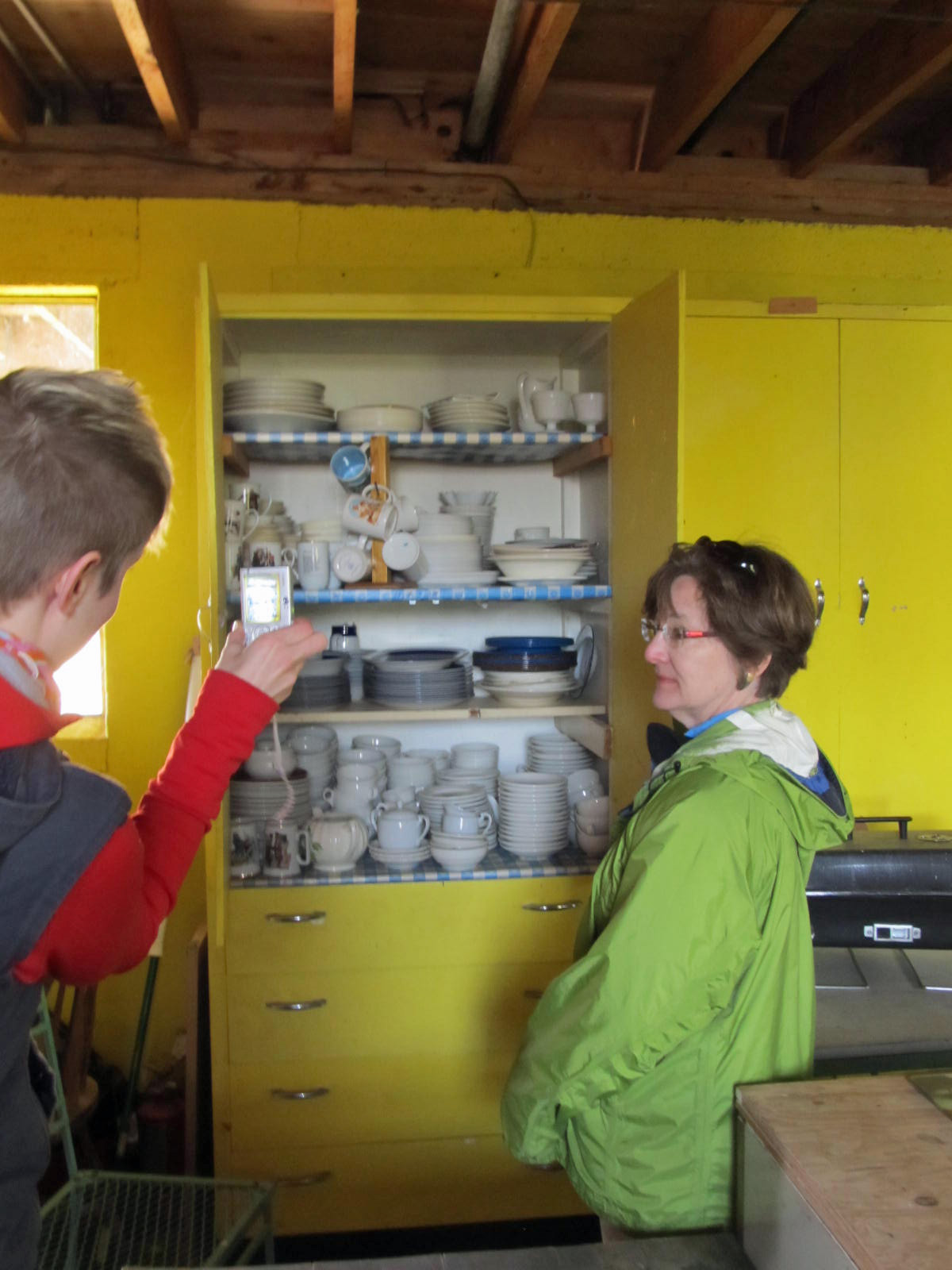
On Mackinac, that building was Silver Birches on the north shore of the island. Recently the shutters were thrown open and the new owner invited the public to tour the property before a massive restoration begins.

While the main building is certainly in need of work, it was nowhere as rough as we had been expecting.


It appears the previous owners simply locked the doors and left - all the furnishings were still in place, a curious mix of Victorian and 1970!


 I was surprised at the condition of the vintage furniture, I would have expected the "critters" to have caused significant damage during the decades the house was closed.


I've always avoided Island politics on this blog, there's lots of other places to participate in that conversation.

If you follow this blog, you know that history and original artifacts are very important to me personally and
the recent Mackinac trend of demolishing historic buildings and replacing them with structures more appropriate to Disney World is very hard to watch. However, I do not place the blame on the developer - he has worked within the law. I DO blame decades of city government who refused, until recently, to put in place the regulations necessary to preserve our history. While there are now historic districts in place, it remains to be seen how effective that designation will actually be in preserving our buildings.

So,  I want to offer sincere thanks and good wishes to the new owner of Silver Birches, who is making the massive effort to restore this historic property - and I can't wait for the next open house, in several years to see the final result.

Friday, June 21, 2013

North of 45 Opening


The North of 45 show opened June 7th and I'm really glad I was able to attend - it's a wonderful space and a beautiful show.


My piece, "The Foundation or In the Beginning" was very well displayed and generated quite a bit of interest and conversation.


The juror, Mason Riddle, gave a brief talk about how she approaches the process of selecting pieces for a show and specifically mentioned that she wasn't sure she could include a "beaded tree stump" but after seeing the piece in place, in person, was very glad that she had chosen to include it - me too!


The local paper, The Mining Journal, covered the show, read their article here.

The show runs through August 4th - it's well worth a visit if you'll be in the Marquette area.

Monday, June 17, 2013

2013 Lilac Parade

It's lilac time on Mackinac and the highlight of the season (besides the glorious lilacs) is the Lilac Parade!

The leader of the parade is always Don Andress, a descendant of Chief Mackinac.


We have beauty queens, including the Lilac Queen, Princess and court:


Pretty horses:


Bands of all types:


Decorated floats:


Walking entries (no cars, of course!):


Including clowns:


And bikes too!:


Even the bike riding street sweepers:

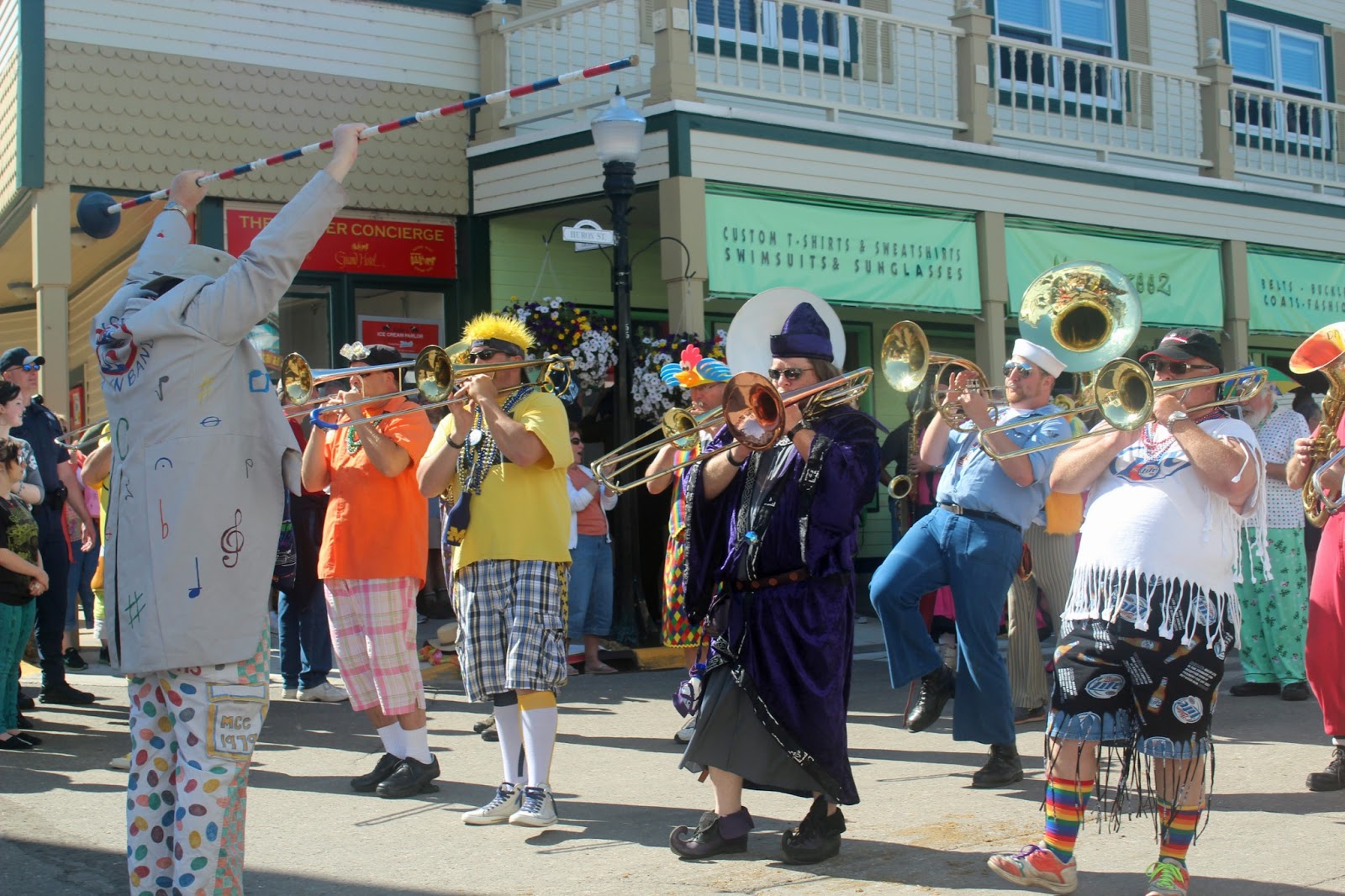
And the grand finale is always the Scottville Clown Band, doing a raucous bump and grind the length of the parade route:


It's a great parade, with certain traditions but always with a bit of a twist - come join us next year!